



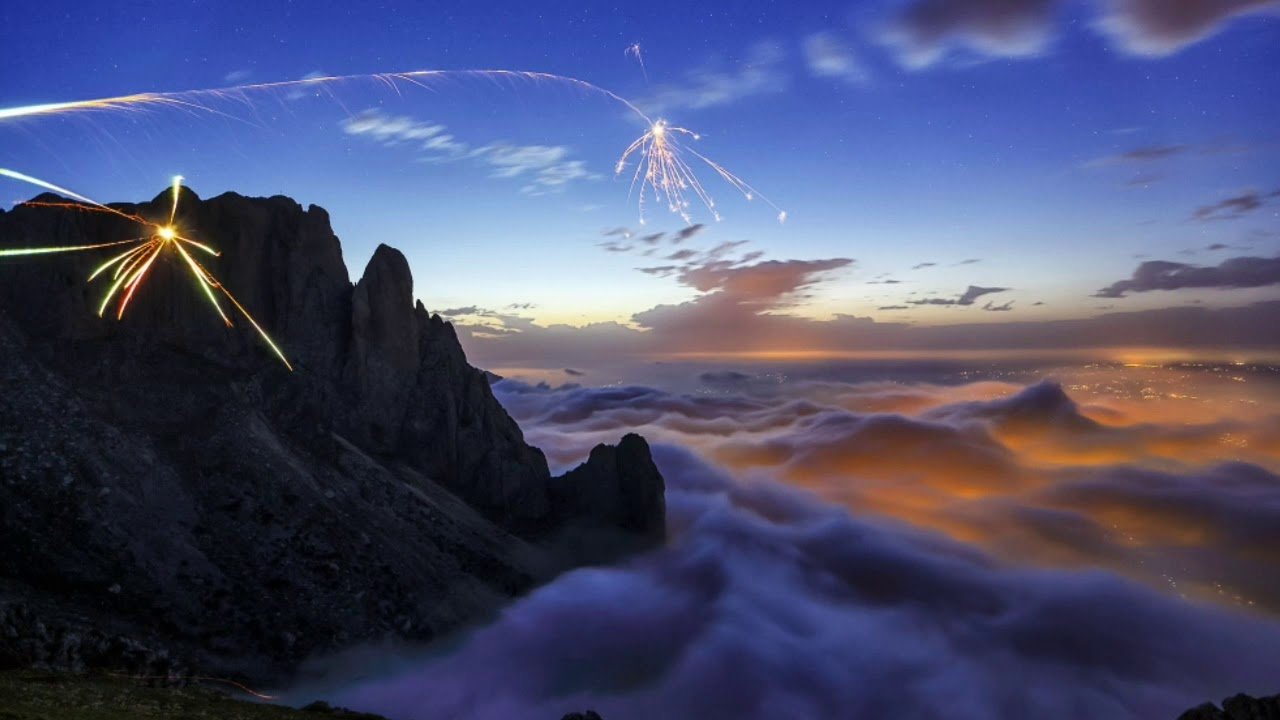

A trip to the heart of Great Kabylia, a stroll through the Djurdjura National Park, its massifs, forests, valleys… Nature!
- Djurdjura National Park
Located between the wilayas of Bouira and Tizi-Ouzou, the Djurdjura National Park covers an area of 18,550 ha. With its massifs, dense forests, valleys, countless plant and animal species, it is one of the most beautiful sites in the Maghreb.

- Djurdjura chain
Majestic ridge that stretches for about 250 meters. It is a biosphere reserve recognized by Unesco since 1997. The panorama offered by the mountains is breathtaking. The Djurdjura chain is made up of several summits: Djebel Haïzer (2123 m), Ras Timedouine (2305 m), Akouker (2184 m), Lalla Khedidja (2308 m), Azrou N’tohor (1864 m).

- Tikjda
Health resort perched at an altitude of 1475 m between Jebel Haizer and Akouker. It is one of the most beautiful sites in the Djurdjura. Even in summer, this resort lends itself to hiking. Open your eyes wide and admire the lentiscus scrub, the cedars, the Aleppo pine forests, the Zean oaks, the holm oaks …

- Thaletat
It is a magical landscape, Thaletat rises to 1638 m above sea level. It is located in the Akouker massif, which occupies the center of the Djurdjura range. There is a traditional gîte where you can eat and even spend the night.

- Yakouren
Very beautiful forest massif located 11 km from Azazga. During colonial times it was called Little North African Switzerland ’. Yakouren forest is bordered by villages and hamlets. This region is rich in plant and animal species: cork oak, Zean oak, Afares oak, wild boar, jackal, hare, porcupine, owl, cuckoo, crow, sparrow… hiking there is immeasurable pleasure!

- Larbâa Nath Irathen
Fort National is its old name. The village was established in 1857, on the territory of the great tribe of Ait Irathen. This old fortress offers a beautiful panorama of the ridges.

- Beni Yenni
Group of villages perched on the ridges. The region is famous for making jewelry. In chiseled silver and adorned with filigree, they are embellished with blue, green and yellow enamels, as well as corals.
- Taksebt dam
This large hydraulic dam is located 10 km east of the town of Tizi Ouzou, on wadi Aïssi. Its capacity is 180 million cubic meters. It is fed by rainwater and melting snow.

A report by Makhlouf Aït Ziane.
Tour in the villages Larbaâ Nath Irathen, Ath Yenni, Tigzirt, Tizi Rached: Beautiful and captivating Kabylie
Kabylia, attractive and fascinating at the same time! These are not generous qualifiers born of overwhelming enthusiasm, but a reality that we had the pleasure of discovering and that we will not soon forget. As soon as it is possible for us to make a hike, through the mountains and villages of this region which defies time, the desire is imposed on us to linger there as much as possible, because such places really deserve a deviation.
After Boussaâda and M’sila, we go to the wilaya of Tizi-Ouzou, in Kabylia, to meet deep Algeria, and its many secrets. We are Wednesday August 14th. At 8 am, the main arteries of the capital are animated by an incessant comings and goings. We take a seat in a well-equipped bus chartered by the Algerian National Tourist Office (ONAT). There is a nice atmosphere within the group of journalists, members of the association “tourist feathers”.
Heading to Larbaâ Nath Irathen
The trip didn’t last long. It was at 11 o’clock sharp that we arrived on the outskirts of the town of Genêts. The thermometer reads 35 ° C, a clear sign of a heat wave at the limit of the bearable. Our first destination: Taourirt Amokrane, located about 2 km from the town center of Larbâa Nath Irathen. Taourirt is one of the largest and most populous villages in Kabylia with its 22,000 inhabitants. After fifteen minutes, a road sign indicates the direction of Larbaâ Nath Irathen. We take its winding streets that go up. We didn’t expect such a surprise: at the bend of a bend, the Taksebt dam is suddenly revealed to us. A magical landscape formed by beautiful forests and villages with mountain tops. The bus stops so we can take some pictures. “Not stopping to contemplate such a magnificent landscape is really missing the point,” says the driver. At this moment we have the impression that we are in another world. The site is captivating with surrounding green forests, the beneficial waters of the dam. The sun with its golden rays has given this panorama a real beauty. It really looks like a work crafted by the expert fingers of a painter with a fruitful imagination. “You see how pretty Kabylia is,” said Nacera, public relations officer at ONAT.
A few minutes of rest and we continue on our way. Each time the bus begins to climb through endless and winding paths, we have the impression that we are approaching the sun and our eyes are seized with an exquisite fascination at the discovery of so many rural landscapes. A large portrait of Abane Ramdane is posted at the entrance to Larbaa. Suddenly, a feeling of pride invades our mind. “Abane,” underlines one of the journalists, is a man whose contribution, more than meritorious, to our struggle, will remain engraved like on marble in our memories. He sacrificed his life for a free and independent Algeria. Abane and all the brave chouhada and moudjahidine allowed our country to free itself from the horrors of French colonialism ”. We learn on the spot that the colonial army had difficulty crossing the few kilometers that separated it from the city. It took him ten years to overcome the fierce resistance of Fadhma N’Soumer and his valiant warriors.
Taourirt Amokrane: tradition is jealously preserved
In Taourirt Amokrane village, our feeling has completely changed. Several houses are built according to the standards of traditional architecture, the roofs are covered with tiles (qarmoud), and stone walls. What caught our attention were the beautiful women in traditional outfits. This reminds us of the good old days, and also denotes that the population of this region jealously preserves its habits and customs. Despite this, the old people of the village did not hide their fear about the disappearance of certain customs, especially with the mixing of cultures. Na Aldjia, an old woman, carries a jar on her back. The signs of fatigue and the wrinkles of old age appear on his face. Without delay, she gets to the heart of the matter by recounting with a certain nostalgia marked with regret her experience: “Of course, we were poor and our villages were deprived of all the means necessary to live in a peaceful climate. However, despite these shortcomings and the harshness of the environment, we were happy “. “Hard, hard, were the days back then, but the evening always made us forget the fatigue. We met as a family and discussed different subjects, ”says our interlocutor. Given the importance of this old woman’s testimony, we were truly immersed in another era, especially when she began to talk about her grandmother. “Ammi, (my son) she said smiling, our grandmothers never stop passing on the culture and language of our ancestors through wonderful tales”. Before leaving us, Na Aldjia insisted on the importance of keeping and preserving our traditions and that, through the education of future generations according to the values of our ancestors, to better face the future.
Strings of hills with wooded terrain
After a short stroll in the village, we attended the wedding of a sister. To welcome us a delicious couscous. This traditional dish shows the place and the preponderant value accorded in Kabyle society to this dish. Not a minute to lose. Destination: Ath Yenni located about forty-five kilometers south-east of the capital of the wilaya. We took a winding road, sandwiched between the mountains. The landscape is magical. Despite the fatigue, the beauty of the wooded hills made us completely forget the journey. This natural site has given this region a unique character. As you climb, everything feels huge. The bus stops after forty minutes. An ideal moment to breathe fresh and invigorating air, savor the rest, enjoy a breathtaking view and a lush space dominated by an almost Olympian calm. After just a few minutes, you feel like you have been freed from the stress of the city and of work. “Tourism is not just about travel. It is also the choice of location that allows you to better appreciate all the striking beauty of the region, ”says Salim.
Ath Yenni’s jewelry: a local product to protect
In downtown Ath Yenni banners are displayed welcoming visitors, a sign that the jewelry festival is very famous. The first thing that comes to mind is the famous writer and activist of the Berber cause Mouloud Mammeri dit da Lmulud. We have to walk 300 meters before entering the interior of the exhibition center. Young girls and old women walk around, dressed in Berber dresses draped in beautiful “Fodhas” (a kind of loincloth) in shimmering colors.
This short trip to the city center allowed us to admire the beauty of the landscapes. Inside this exhibition space, several artisans and dealers from different regions took part in the meeting. Various jewels are on display. Some local artisans have expressed dissatisfaction with the practices of dealers from other areas which they believe may damage the reputation of Ath Yenni jewelry.
The sun is setting on the horizon, the wind is getting stronger and the temperature is dropping. It’s time to leave the scene. A moment that will certainly remain etched in our memories. We learn on the spot that several citizens of this city immigrated, during the war of liberation and after independence, because of the harsh environment. Ath Yenni is proof of an authentic culture with its rich heritage, writers and artisans.
Si Mohand Ou Mhand’s house will be transformed into a museum
We continue our way towards the town of Tizi Rached. About twenty kilometers from the capital of the wilaya of Tizi-Ouzou. It is nine o’clock. In search of a restaurant, we were pleasantly surprised by the gesture of da Mohand who invited us to attend his daughter’s wedding. A proposal that teaches about the sense of hospitality of the people here. This opportunity allowed us to meet the vice-president of the APC. A brief discussion then ensued about the customs and traditions of the region, as well as its local development. The vice-president noted that the house of the famous poet Si Mohand Ou Mhand, which still arouses the admiration and interest of the children of Kabylia, will be restored soon. The house is located in Sidi Khlifa, classified as national heritage. We’re going to turn it into a museum.
Tigzirt: 40% of accommodation rented to summer visitors
Next morning. Direction Tigzirt (island in Berber) or even the ancient Iomnium during the Roman era. A tourist region par excellence, 40 km north of the city of Tizi-Ouzou. In this coastal region, a fact caught our attention. Debris from bottles litter the ground. We are in front of a real affront to the environment and we affirm it with a sad feeling of disappointment, especially since it is absolutely painful to see such an impressive amount of waste soil – and it is the case. to say it – such graceful landscapes. And yet! Should we not ensure respect for tourists and nature as was the case before?
An hour’s drive away, the pretty Tigzirt appears with its magnificent beaches. It is eleven o’clock. The traffic is heavy. Sign of great animation. Hundreds of summer visitors and holidaymakers from different villages and other parts of the country have decided, quite opportunely, to take advantage of the bounties of nature. We are warmly welcomed by Abdelkader Azouz, President of the National Federation of Local Tourist Offices, who was satisfied with the tourist activity. He said that “this year there is a significant influx of visitors, which has resulted in improved services and benefits.” According to him, the region has nine three-star hotels that are fully booked.
Regarding guesthouses, he said that this formula has “also seen a remarkable improvement. About 40% of housing at the locality level is rented during this period ”. Regarding rental prices, the president of FNAT notes that “the pricing oscillates between 5000 and 8000 DA per day”. After a brief discussion, da Hacene invited us to visit the archaeological site, located by the sea. From the outset, we almost instinctively believed that we were immersed millennia earlier. Each vestige challenges us. Alas! We had run out of time to fully discover the charms of this beautiful city. Tigzirt deserves, to say the least, a long stay.
Mr. A. Z


