



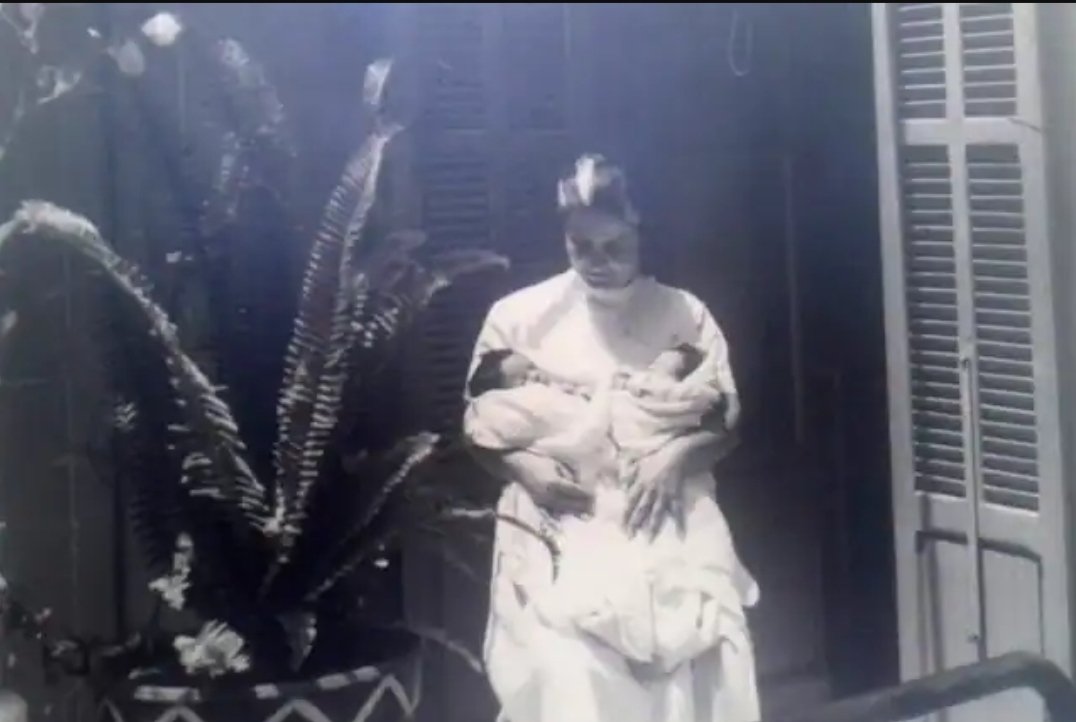
In the years that followed, his family appealed for information about his whereabouts, but to no avail. More recently, a historian uncovered in France a decades-old investigation into his case, but it did not reveal his fate.
The Asselahs believe some answers may lie within archives kept in France, and just last week, French lawmakers passed a controversial law that, according to government officials, will ease access to certain archives. Families of thousands of Algerians who vanished during the war for independence hope this kind of movement could offer them a glimmer of hope.
After the government of President Emmanuel Macron recently took steps to more fully acknowledge abuses carried out by France during the colonial conflict, the Asselahs are eager to learn more about the case that has haunted their family for generations.
“This is what we want to know: What did they do with his body?” Rachid said in a recent interview in his family’s home in the Algerian capital. “Did they assassinate him? Did they toss him into the sea?”
A French official said the government has “put in place tools such as a digital guide on the disappeared, in French, English and Arabic, to facilitate the research of families who can then request copies of documents by a simple written letter.”

But some historians argue the new legislation could in fact tighten access to certain archival documents, including some related to the Algerian war for independence. “We’re not gaining any ground here,” said Malika Rahal, a France-based historian who co-manages 1000autres.org, a project that has collected information regarding Algeria’s disappeared, including Asselah.
Researchers further caution that navigating the immense archives is difficult even for professional historians, and that despite many families’ hopes, they are unlikely to contain major revelations about specific cases. French officials probably did not regularly record evidence of events like extrajudicial killings, for example, several experts said.
If such records do exist somewhere, they may be in former military officials’ private notes, not necessarily in formal archives — making such documents very difficult to obtain.
Still, “you can’t rule out the miracle” that something will turn up in the archives, Rahal said. Alternating “between hope and despair,” she said, is “part of the condition of having a forced disappearance in your family.”
Official acknowledgment
In March, Macron met with the grandchildren of Ali Boumendjel, a prominent Algerian lawyer and independence fighter, and acknowledged that he had been “tortured and then killed” by French troops in 1957. French authorities had long claimed he had killed himself.
Macron’s statement on Boumendjel — paired with a recent high-profile report he commissioned on Algeria — contributed to a sense that France might finally be ready to confront its conduct in the Algerian war.
But many of those who disappeared during the conflict were far less known than Boumendjel and their cases less celebrated, such as Asselah.
He was born in January 1924 in a village about 85 miles from Algiers. His father sold land owned by the family to pay for his education, Rachid said, and Asselah eventually moved to Algiers, where he pursued a degree in medicine. Asselah was a student of the famed Martinique-born psychiatrist and political philosopher Frantz Fanon, and his academic research focused on dreams.
In 1954, the same year the war broke out, he married his cousin, Baya. She gave birth to the twins the following year.
Asselah had been politically active in the prewar years, and once the conflict broke out, he began discreetly treating wounded members of the armed wing of the independence movement called the National Liberation Front (FLN), according to his family’s account.

In early 1957, while transporting an injured FLN militant in the back of a car, his family said, he saw French gendarmes installing a roadblock ahead. The car sped past them but the French military later linked him to the incident. He became one of many Algerians arrested in the capital during the brutal period known as the Battle of Algiers. He was at one point recorded as having been liberated, his family said, but he never reappeared.
An unsolved fate
The mystery surrounding their father’s fate cast a shadow over the twins’ upbringing, they said. Their mother struggled financially while living with their grandfather. Eventually, after Asselah was declared dead, she remarried. But she was never allowed a sense of closure in the case.
“The problem is we never buried him,” Rachid said. “We couldn’t mourn his death.”
Years after he disappeared, their mother crossed paths with a nurse who had worked in the same doctor’s office as her husband. The nurse unexpectedly returned his brown suitcase to the family, explaining that she had held onto it following his arrest.
When they opened it, his scent wafted out as they sorted through his belongings and wept. “It’s all we kept,” Rachid said of the items in the suitcase. “There was nothing else.”
Both children went on to become doctors, “wanting to follow in his path,” Samia said. When Rachid’s wife eventually gave birth to a son, they named him Slimane, after his missing grandfather.
Although decades have passed since their father’s arrest, the Asselahs, like many Algerians still missing relatives who disappeared during the war, remain troubled. So far, Macron has recognized French responsibility only for the deaths of Boumendjel and Maurice Audin, a mathematician and pro-independence figure who was tortured and disappeared in 1957.
With a national election coming up next year in France, “Macron has no interest in going very far” in addressing French conduct in Algeria, said Fabrice Riceputi, the historian who co-manages 1000autres.org with Rahal and uncovered the old inquiry into Asselah’s case. Revisiting colonial-era abuses remains very sensitive in France and the topic has previously riled Macron’s political opponents.
Acknowledging responsibility for Boumendjel’s death was “a good step in the right direction, but really a very small step,” said Riceputi.
It has offered little satisfaction to Algerians, who widely view the conflict as “collectively experienced,” said Natalya Vince, who teaches North African and French studies at the University of Portsmouth in England. “There are thousands of men, women and children who disappeared and no one ever heard anything about them ever again,” she said.
Rachid said he wants “all missing Algerians … to be recognized.”
In his family, the unresolved fate of their father means living with a constant sense of unease, Rachid said.
“We are always waiting for something. . . . Waiting for a revelation, waiting for truth,” he said. “What became of our father. . . . Is there a place where he’s buried? We don’t know. And that’s the problem.”
Source : https://www.washingtonpost.com/world/middle_east/algeria-france-colonial-archives-asselah/
