



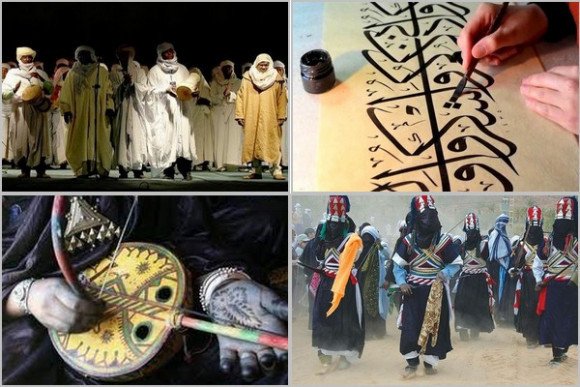
ALGIERS- As every year, from April 18, Algeria celebrates the richness and diversity of its tangible and intangible cultural heritage through a program of activities through museums and other specialized institutions, aimed at promoting and popularizing this legacy while taking stock of preservation.
Placed under the theme “Intangible heritage, identity and authenticity”, the heritage month will be particularly oriented, this year, on the intangible aspect and other elements such as traditional costume and jewelry, manuscripts, or the distillation of flower water with the objective of making citizens aware of the importance and richness of their culture.
The heritage month, which takes place between the International Day of monuments and sites (April 18) and the World Museum Day (May 18), will be hosted mainly by national museums such as the Bardo, the Cirta, the museums of arts and popular traditions, the museums of Cherchell and Tébessa or that of the Navy, in addition to museums of sites, such as the Bey palace of Constantine and Bastion 23 in Algiers, and national cultural parks.
Read also: Tangible and intangible heritage: the ministry approves the financing of 18 operations
Numerous exhibitions related to handicrafts such as pottery, jewelry and traditional costume are on the program of these establishments which also offer a wide variety of meetings and thematic round tables on different elements of intangible heritage, preservation, restoration inventory or folk arts and traditions.
As for the national cultural parks, the Office for the protection and promotion of the M’zab Valley (Opvm) is planning a series of exhibitions on local traditions and building materials in addition to meetings on oral heritage, manuscripts, the relationship to water, and training workshops.
The cultural parks of Ahaggar (Tamanrasset) and Tassili N’Ajjer (Djanet) also offer activities to promote the local intangible heritage and numerous educational outings for school children. The Tindouf Cultural Park, for its part, offers awareness-raising activities and workshops on various crafts such as argan oil extraction.
New files for classification as World heritage of humanity
The year 2022, which is experiencing a special attention for the intangible cultural heritage, is also marked by the filing of two new files for World Heritage of humanity classifications with the United Nations Educational, Scientific and Cultural Organization (UNESCO), “Rai music” and “crafts and know-how related to metalworking”.
A committee of experts and researchers from the National Center for Anthropological and historical Prehistoric Research (Cnrpah) has enriched and submitted this dossier for the next session of the Intergovernmental Committee for the safeguarding of the intangible cultural heritage, a session that will also have to study the dossier on the arts, know-how and practices of engraving on copper, gold and silver, coordinated by the Republic of Iraq and with the participation of countries such as Algeria, Tunisia, Egypt, Mauritania, Palestine, or Saudi Arabia.
These two new potential rankings will be added to the eight other elements already appearing on this prestigious list on behalf of Algeria, which are the Ahellil of the Gourara, the bridal costume of Tlemcen, annual pilgrimage to the mausoleum of Sidi Abd El Kader Ben Mohamed known as “Sidi Sheikh”, the Imzad, the Sebeïba ceremony, the Sbuâ (celebration of the Mawlid Ennabaoui in the Gourara), couscous and Arabic calligraphy.
Translated by Hope from APS
