



The palace of Princess Khadidja, “Dar el Bakri” or “Palace of Ms. Khedaoudj el Amia” (the blind), so many names given to this historical monument planted in the heart of the medina of Algiers, is an essential place of memories and meditation which adds to the many sites that make up the material cultural heritage of Algeria.
Nestled in an alley in the lower Casbah, this palace, which houses the National Museum of Popular Arts and Traditions, refuses to give up and is fighting a stubborn fight against its worst enemy, time. It stands in all its splendor to recall a bygone era but oh so dense and intense. A haunting reminder for successive generations.
The beautiful princess and the mirror
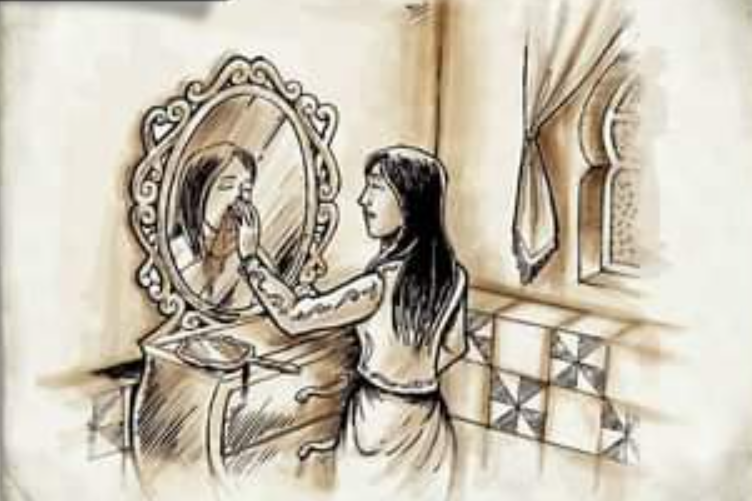
Legend has it that Princess Khadidja or Khedaoudj el amia was of rare beauty. She spent most of her time in front of her mirror, contemplating herself and admiring her charm, which was said to be extraordinary. She changed her outfit and hairstyle several times a day, correcting an imperfection or straightening a flyaway that would offend the look she wanted to be unique.
The makeup was obviously sorted and expertly chosen to enhance her features even more. Her narcissism was growing as she found herself beautiful beyond what can be described. Her attention to detail, which keeps her glued to her mirror, caused her to lose her sight, it is said. Another version attributes the princess’s blindness to the kohl (eye line) she used to outline her eyes. The excess of this make-up would have been the cause of this tragedy, according to some.
Women born or raised in this almost mythical city, the Casbah, will always remember the prohibition which was made to them in their childhood to look at themselves or rather to contemplate themselves in a mirror. “Each time I took a mirror to look at myself, my mother and my grandmother cried out in unison, throwing at me: ‘hide this object or you will go blind,‘” recalls Houria, a teacher, now fifty years old and who, despite his education and open-mindedness, forbids his daughters to look at themselves too long in a mirror. This prohibition or rather this fear remains linked to the history or a legend of Khedaoudj that the inhabitants of La Casbah, through time, have passed on to each other.
 The beautiful princess and the mirror
 The Palace of Princess Khadidja | by: Abderrahmane Boudjenane
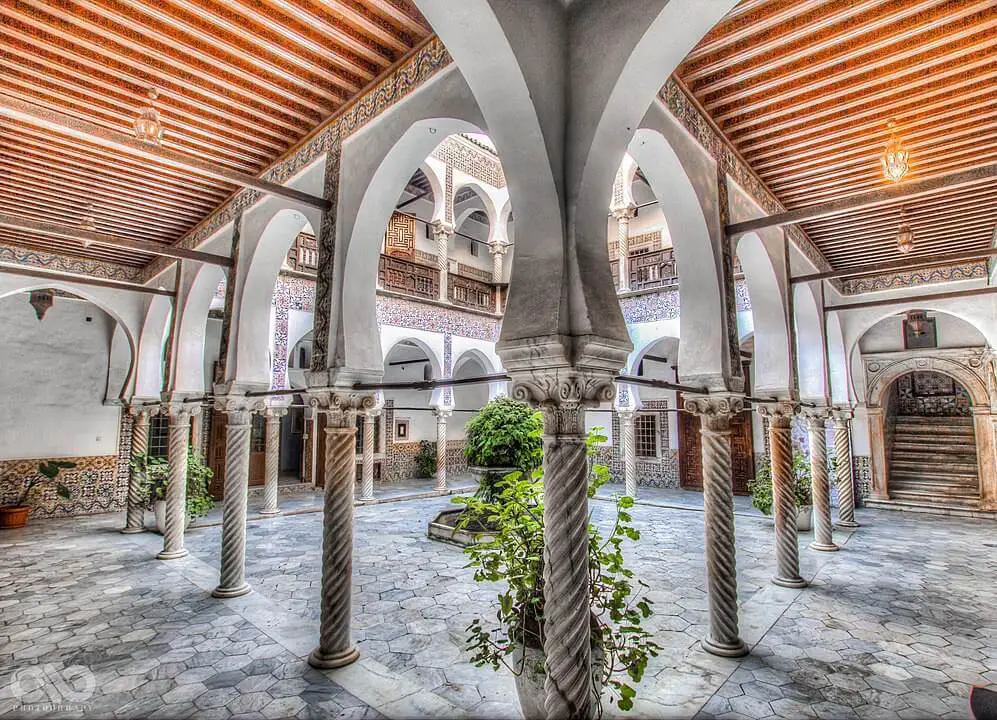 The Palace of Princess Khadidja | by: Abderrahmane Boudjenane
Built in 1570 on the site called Souk El Djemaâ in the lower Casbah, on the ruins of the zaouia and the mausoleum of Sidi Ahmed Ben Ali by an officer of the Ottoman navy in this case Rais Yahia, the house did not have the look of a palace but simply of a large residence.
It had been acquired by Khaznadji Hassan Pasha, treasurer of the Ottoman king under the era of Dey Mohamed Ben Othmane who introduced modifications and extensions, giving it the appearance of a palace which he offered to his daughter Khadidja El Amia.
And Napoleon usurped the residence
After the invasion of Algeria by the French in 1830, the owners of the premises were dislodged, for a small sum, and the palace became the seat of the first French town hall of Algiers. But in view of the magnificence of the place, the King of France at the time, Napoleon III and his wife Eugénie, decided to take up residence there from 1860. Each time the King came to Algiers, he went directly to this palace.
The palace retains its authentic architectural character to this day. An imposing carved wooden portal opens onto the main entrance which leads to a long vestibule called “skifa” backed by twisted marble columns. Four arcades are aligned on the left side separated by three twisted columns. Two arches run along the right side of the wall of the skifa (vestibule) decorated with cheerfully colored earthenware called “Zelaidj”.
Upstairs are the rooms with richly decorated walls revealing Moorish art in its most refined forms and which provides information on the artistic level and the splendor that characterized the Ottoman period.
A connoisseur would quickly notice the purely European modifications introduced on the upper rooms, starting in 1860, the date of the capture of the palace by Napoleon III and his wife Eugénie.
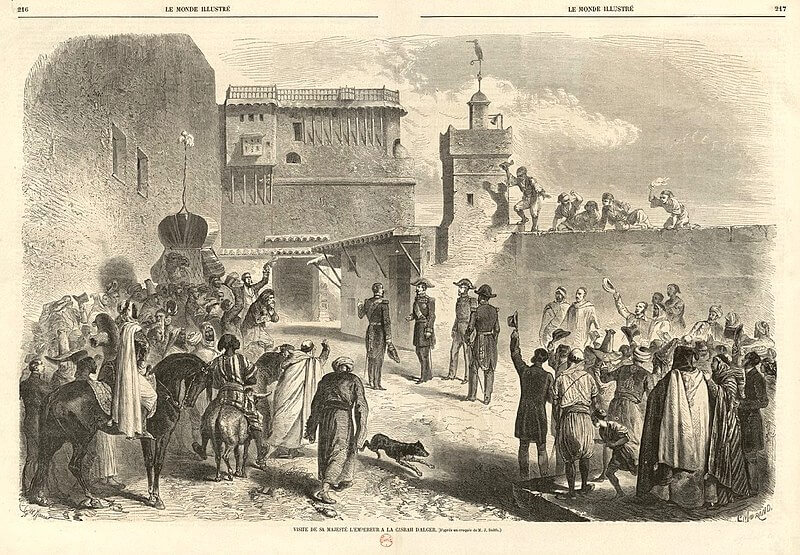
Algiers, Napoleon III visits the Casbah of Algiers
To access the upper floors, the visitor must take a staircase also surmounted by a dome. On the top floor, is the Menzah (terrace) which overlooks the maritime facade which allowed the occupants of the premises to breathe the invigorating air of the sea, and the women to escape the confinement offered by the rooms of the palace.
As in any house, the palace contains the kitchens where there is a well for daily work, the baths and the shower rooms. Transformed in 1947 into a craft conservation service, the palace became in 1961 a museum of traditional arts and a permanent exhibition for craft workshops and ancient trades. In 1987, it became the seat of the National Museum of Popular Arts and Traditions.
The building refuses to abdicate
Heritage researchers, sociologists, architects and museum officials have worked to recover museum pieces either by buying them back or through donations of pieces from citizens or institutions.
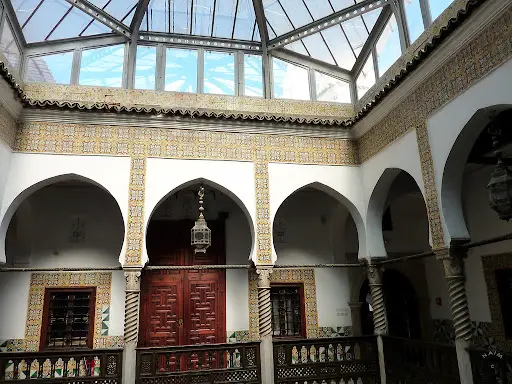
Dar Khedaoudj El Amia Dar el Bakri
Very precious old pieces, furniture, weaving, brassware, leather and wood representing the different regions of the country are exhibited in this sumptuous residence. There are Targis and Kabyle handicrafts, Algiers furniture, jewelry from Tlemcen, Adrar carpets, upholstery fabrics woven with silk threads from the M’zab and pieces from the Aurès.
The central room of the museum is dedicated to the skillfully worked and finely decorated period mirrors, in particular the one which would have caused the blindness of the princess.
Between the legend and the reality that surrounded this majestic site, the house “El Bakri”, as the Algiers people like to call it, is there and there, fulfilling its historical mission, that of remaining above all this link of authenticity that unites generations.
Translated from https://topdestinationsalgerie.com/dar-khedaoudj-el-amia-le-miroir-enchanteur-dune-belle-epoque/
