



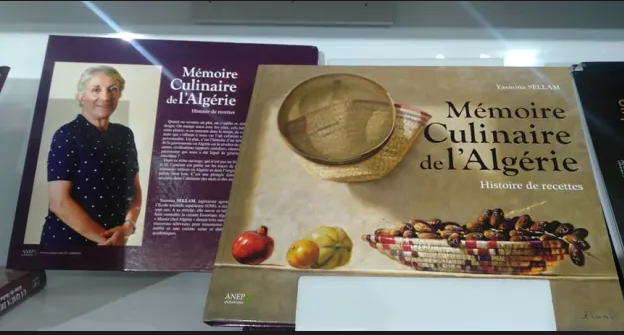
Yasmine Sellam, chef, has just published a beautiful book with ANEP editions in Algiers: “Culinary memory of Algeria”. It details the history of the recipes, explains the origin, gives geographical clues, reviews the utensils used and sheds light on the ingredients. “Culinary art is a major element of our personality. A dish is the story of a terroir, of a region”, it is underlined in the book. Yasmine Sellam, who was a member of the jury for the “Master Chef Algeria” competition, is the manager of the “Dar Jeddi” restaurant in Algiers.
24H Algeria: It is rare to find in Algeria a beautiful book devoted to the culinary arts. How did this project come about?
Yasmine Sellam: One day I took a trip to Yemen. People did not know Algeria. I found this curious and shocking. I had to tell them that Algeria is this big country that lies between Tunisia and Morocco. I understood that we did not do much to make ourselves known. So I decided to start writing. I did not write this book for foreigners but for Algerians. My message: “Know your culture and cuisine first, when you go out you will defend them and make your country better known”. Algerian culinary art is not bastard. It is rooted in history.
And you mentioned all the outside influences on Algerian cuisine?
I wanted to chronologically tell the influences of the Romans, the Babylonians, the Pharaohs, the Abassadides, the Umayyads, the Andalusians, the Ottomans and the French. Our cuisine has undergone all these influences, but we also have our own cuisine which is known all over the world. Couscous is a dish that is served in all continents. Couscous is present in traditional Brazilian cuisine. Moghrabia, which is berkous, is present in the Middle East, etc.
UNESCO has classified couscous in the World Heritage List as a “Maghreb dish”. What do you think ?
I am against those who say that you have to find a birthplace for a recipe. A recipe does not have a place of birth. The recipe is a product that is born there, develops here and still develops there and so on. A recipe can go around the world. What is important is to explain how we prepare our couscous dishes. In the book, I emphasize that the acts of the international dimension of couscous were played in Algeria, neither in Morocco nor in Tunisia.
And what influences have remained, standing the test of time?
Each influence crushes the one that preceded it but there is an accumulation. Many dishes remained. The Abbasids left us many dishes like El Barania (aubergine-based stew that resembles Mderbel). The Andalusians left us dishes such as El foul bratel (spicy dish made with fresh broad beans and coriander), merguez sausages, etc. The Ottomans brought back the Baklawa, the Bourek and the Chkamba…
Do you agree with the idea that Mediterranean cuisine is the best in the world?
Yes, because it is based on olive oil. Contrary to popular belief, you can fry with olive oil, you just have to know how to control the temperatures. Cooking is first and foremost a science. Algerian cuisine is deeply Mediterranean.
Are there still dishes in Algerian cuisine that date back to the Middle Ages and antiquity?
The guernina (milk thistle) used in the preparation of couscous with vegetables dates back to prehistoric times. Andalusian dishes are those born in the Middle Ages.
Today, in Algeria, Chawarma and Maynama, which are oriental and African dishes, are everywhere in Algeria. How to safeguard the Algerian culinary identity in the midst of this diversity?
There is a threat to the Algerian culinary identity. Algerians do not yet know all the richness of their cuisine. We must educate young people about our ancient gastronomy which is good for health. It’s necessary. The Numidians, who are Algerians, left many recipes. In the Maghreb, there were peoples who had rich, perfect cuisines, adapted to their environment.
Translated from : https://www.24hdz.com/yasmine-sellam-chef-cuisinier-art-culinaire-algerien/
