



At a time when world prices of basic necessities are soaring, Algeria is multiplying initiatives to try to achieve agricultural and energy self-sufficiency. A project with China, in the fertilizer production sector, has just been signed.
Last Tuesday, Algerian and Chinese companies signed a cooperation agreement for the implementation of a megaproject in the transformation of phosphates into fertilizers. The project, estimated at $ 7 billion, was the subject of a tender last year, won by the Chinese companies Wuhuan and Tian’an, which will collaborate with Asmidal, the subsidiary of Sonatrach. The new company, Algerian Chinese Fertilizers Company (ACCC), is 56% owned by the Algerian side.
China is the leading producer and exporter of fertilizers in the world. A sector that has allowed the Middle Kingdom to position itself on several agricultural markets, such as those for rice, vegetables or meat.
And Chinese agricultural production far exceeds its own needs, Beijing has no difficulty feeding its population — a quarter of the world’s population — and even surpasses the United Arab Emirates in terms of food security, according to the rankings of the International Fund for Agricultural Development (IFAD) and the World Food Program (WFP).
Progress that China owes largely to the production of phosphate fertilizers, a market in which it controls 28% of production and almost 13% of exports on the world market.

Algeria, for its part, is the first country in Africa in terms of food security, and the first, also, in fertilizer production. Algiers is the eighth largest exporter in the world, in addition to being able to boast of being self-sufficient.
China-Algeria: A politico-economic choice
Why did Algeria choose to invest more than $3 billion in this project with China? The project will make it possible to produce up to 5.4 million tons of fertilizers per year, which will place Algeria in the third place in the world in fertilizer production.
Even by exporting half of the fertilizers produced by this project, Algeria will be on track to dominate, along with China, by far the world ranking of fertilizer exports.
Especially phosphate (nitrogen) fertilizers are best for growing in arid and semi-arid regions. Despite its very good agricultural production, Algeria exploits barely 18% of its territory for agriculture, in particular because of the climate.
An economic choice that questions, therefore: is Algeria on the way to further develop its agriculture? In any case, the timing makes it possible to think so. With imports of cereals and other agricultural products stalled due to the Russian-Ukrainian conflict, states less close to the West — Algeria and especially China — fear that this will have serious consequences.
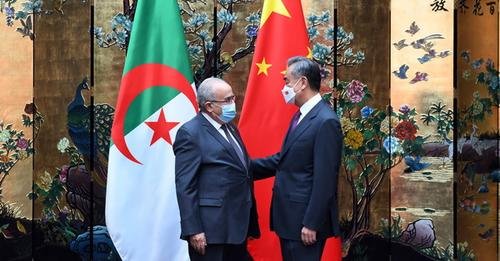
But this agreement is also very political. While Europe is increasingly fond of Algerian gas — a boon for the European Union in the midst of an energy shortage — Algerian diplomacy is in a very comfortable position to engage in new projects with international partners, including China.
“Today’s world is facing serious challenges and the humanitarian crisis is worrying. In particular, the legitimate rights and interests of many developing countries have been violated, and they are forced to choose sides, or even renounce their diplomatic autonomy. This situation must not continue. Algeria and China share common historical experiences and similar positions and proposals. The two sides must cooperate closely to defend the fundamental norms governing international relations and maintain a just and reasonable international order”.
“Algeria shares China’s views on the current crisis in Ukraine. Algeria and China, along with dozens of countries, abstained in the vote on a UN General Assembly resolution on the issue of Ukraine, sending a clear signal that we want to maintain our independence and give peace a chance. The Algerian side believes that China’s proposal is based on international equity and justice, focuses on promoting peace, stability and security and is a good way forward”.
Ramtane Lamamra (Algerian Minister of Foreign Affairs)
Towards real agricultural development?
It also seems that Algiers, with an anticipated doubling of hydrocarbon revenues, intends to invest well to achieve food self-sufficiency. What is it to free oneself diplomatically from any dependence on the West? In any case, the increase in fertilizer production beyond the needs of Algerians is reminiscent of the first stage of the Russian agricultural plan of 2004.
This plan had allowed Russia – currently the second largest fertilizer exporter in the world behind China – to rehabilitate 25% of agricultural land abandoned due to a shortage of fertilizers. A shortage caused by the collapse of the USSR in the 1990s, which Moscow bypassed by installing new plants for the production of nitrogen fertilizers.
“In the context of Algeria, food security is an aspect on which reflection cannot be postponed, because the reforms and adjustments that it would be necessary to undertake to remedy the shortcomings are mainly of a structural nature, the expected results of which will only materialize in the long term. Tomorrow is being built today. Any delay will have far-reaching consequences for the country”
Ali Daoudi (Algerian agroeconomist)
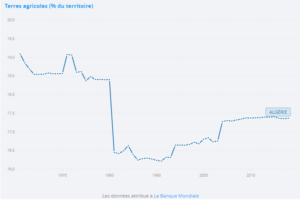
However, the main challenge facing food autonomy in Algeria is not the lack of fertilizers, but rather the climate. However, since Houari Boumediene’s mandate, Algeria has led by example in the fight against desertification. The Green Dam, with its 370 million trees, is still one of Algeria’s priorities.
Translated by Hope from https://lejournaldelafrique.com/algerie-chine-engrais-agriculture-et-politique/
