



Published June 20th, 2021 – 05:39 GMT in albawaba.com
Highlights
The film was screened during the Doc à Tunis festival in April 2011, just months after then-President Zine El-Abidine Ben Ali was ousted at the start of the Arab Spring, and it earned Djouamaa his diploma.
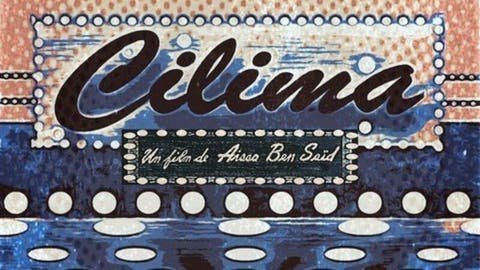
Algerian director and producer Aissa Djouamaa (whose debut feature, “Cilima,” was helmed under his ‘artist name’ Aissa ben Said) may have chosen to keep his distances from the media, but he remains, nonetheless, a deeply committed artist, both behind the camera and on the ground.
Also Read
Algerian Director Mounia Meddour on The Cannes Film Fest Jury
Algerian Director Mounia Meddour on The Cannes Film Fest Jury
He is recognized as someone who has initiated a major and profound change in the movie industry of his native country, Algeria.
Perseverance is one of Djouamaa’s major qualities. When he was rejected by the School of Dramatic Arts in Algiers due to his unsatisfactory baccalaureate grades, he decided to study biology for four years, but his passion for cinema did not fade. So, in 2007 he took the decision to join the Tunis School of Arts and Cinema.
“I enrolled there with the intention of becoming an actor. But when I discovered the universe of the film industry, I started focusing on the picture, the frame and the writing,” he says.
Djouamaa ranked top of his class for two consecutive years before encountering a major problem. “I realized that I was attracted to disturbing social issues, to topics that were not supposed to be addressed,” he says. “I decided that for my final project I would make a movie about the aggressive police attacks that took place during the local derby between the Tunisian football teams Esperance Sportive de Tunis and Club Africain.” However, he was unable to get the necessary authorization, so his film was never completed.
In summer 2010, Djouamaa traveled to Algeria to produce his first short film “Un Cri Sans Echo” (A scream without echo), which focused on marginalized musicians living in Souk Ahras, the artist’s hometown. The film was screened during the Doc à Tunis festival in April 2011, just months after then-President Zine El-Abidine Ben Ali was ousted at the start of the Arab Spring, and it earned Djouamaa his diploma.
When he returned to Algeria, he encountered numerous problems, mainly financial. “I worked as a sales consultant for a multinational company. Every vacation I had, I would make a short film,” he says. “I also taught at the Office des Établissements de Jeunes, which produced my first film.”
Djouamaa’s second movie — “Colors, the Country and Me,” was about a hero of Souk Ahras: Taoufik Makhloufi, the only Algerian to win a gold medal at the 2012 Olympic Games in London.
“It’s about the new generation that perceives Algeria from a different angle,” he says. “It was time to write a new page of Algeria’s history as seen through the eyes of this generation.”
In order to emphasize a different vision to that of traditional non-fiction filmmakers, Djouamaa next decided to take part in his own documentary. “Talking about Algeria’s 50th Independence Day does not necessarily mean talking about the Algerian revolution as such, but rather talking about what Algeria has experienced, from independence until today,” he says.
Djouamaa was beginning to make a name for himself in his homeland. In 2014, he participated in the first Algiers French Institute laboratory and his film “Makash Kifach No Way” was broadcast on French television. The following year, he quit his job and headed to Canada to participate in KINOMADA — a non-profit film production platform — and to shoot his first fictional film, the short “We Return to Paradise,” which featured a rabbi, a priest and an imam. “I have never thought of presenting it in Algeria, as the topic (exploring the merits of art vs. religion) remains taboo.”
In 2016, he took part in a summer program at Paris’ renowned La Fémis film and television school. There, he filmed the Place de la Republique square during the “Nuit Debout” (Up all night) protests against new labor laws. “It has always been the French producing documentaries about Algeria,” he says. “It was about time that an Algerian made a documentary about France.”
His experiences in Canada and France inspired Djouamaa — despite Algeria’s “suffocating bureaucracy” — to establish his own production company, Nouvelle Vague Algerienne (Algerian New Wave). And it was his second fictional short, “Un Homme, Deux Théatres” (One man, two theaters), that saw his reputation grow outside of Algeria.
“This film was the door to international recognition,” he says. “It got screened all over the globe. I even received an award for it in Madagascar.”
At the 2017 Carthage Film Festival, Djouamaa encountered members of the Algerian Ministry of Culture, which only served to reinforce his belief that he was operating outside of his country’s mainstream media business. “They were wondering, ‘Who is this stranger, so unfamiliar to Algerian society, who doesn’t seem interested in who we are?’” he says.
But he got on better with the director of the Algerian commission which allocates funds to filmmakers, obtaining funding for five projects. He went on to shoot his first feature film “Cilima,” which he has described as a “one-of-a-kind film” that combined stories created by four young filmmakers from across Algeria.
“Cilima” is typical of the ideals behind Nouvelle Vague Algerienne, aimed as it is at reviving Algerian cinema.
“I am an artist who recognizes the enormous potential of the young generation. The Algerian New Wave is not just about producing projects talking about present Algeria. It’s a whole educational project. We are trying to make a change”, he explains. “I am a staunchly committed artist, a member of the Hirak. I have always refused to be part of the ingrained system.”
That system in Algeria, he explains, “was based on revolutionary films, subsidized with huge amounts of public money. Algerian cinema reached its peak with the Palme d’Or awarded in 1975 to Mohammed Lakhdar-Hamina. Then came the black decade that saw the number of movie theaters fall from 500 to just 40.”
Djouamaa hopes to see Algerian cinema rise again. Along with two other producers, he has set up the Basma Collective. “In this country we have a lack in film schools,” he explains. “It is extremely important not to cut corners. We are in the process of setting up Timi Lab — a writing development venture — in Timimoun, in the Algerian Sahara, with the help of funds from the international film industry. We are also preparing an African and Arab festival called Timi Film Days.”
As for his own filmmaking, Djouamaa is currently in the process of developing a documentary that he says will “destabilize the current system, especially its relations with France.” It is based around the story of the village of Reggane, the location of French nuclear tests between 1960 and 1968.
Also Read
Algerian Director Mounia Meddour on The Cannes Film Fest Jury
Cannes Film Festival 2017: Tales of the Tumultuous Lives of People in the Middle East
“I decided not to make a historical movie, but instead to bring in my creative touch,” he says. “The story is about an association that contacts an international law firm (in relation to the Reggane tests). The latter files a complaint before the International Criminal Court in The Hague and the European Court of Human Rights in Strasbourg.”
Clearly, Djouamaa’s Algerian New Wave is set on making waves.
This article has been adapted from its original source.
