



Hadj Ahmed Bey Ben Mohammed Chérif, better known as Ahmed Bey, was the last Bey of Constantine and the last Ottoman representative of the Algiers regency.
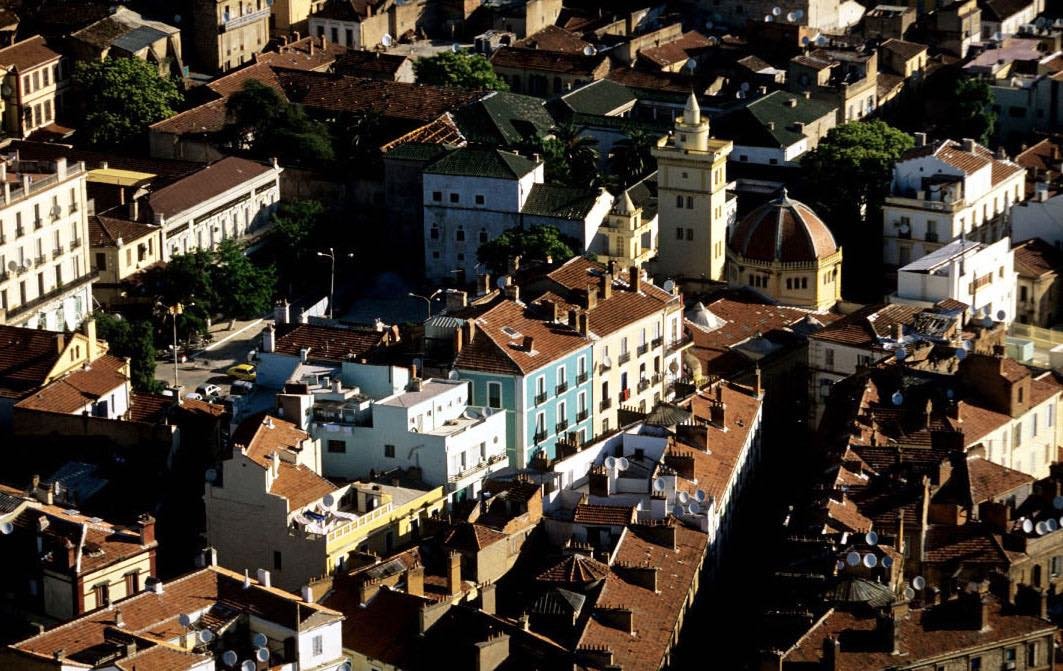
On Si Haous Square in the heart of Constantine, on the site of an ancient Makhzen and houses in the medina, stands the Ottoman Palace of Ahmed Bey with its green-tiled roof and sober whitewashed facades.
The construction of Ahmed Bey’s palace began in 1826, the same year as his appointment as head of the beylik by dey Hussein, and was completed in 1835. Its architects were El Hadj el-Djabri and El-Khettabi and s ‘extends over an impressive area of nearly 5,600 m2.

Photo: Reda Kerbouche – Flag of the Beylik of Constantine during the time of Ahmed Bey
Ahmed Bey was at the head of the beylik of the East (or of Constantine), which was among the three beyliks of the Regency of Algiers – which began in the 16th century and disappeared with the French colonial conquest – alongside the beyliks of Titteri and the West. Ahmed Bey then focused on the modernization of the region, in particular his army.
The palace where Ahmed Bey’s harem was housed is made up of irregular buildings organized around two lush gardens and two small courtyards. The walls of the palace are adorned over more than 2,000 m2 with a polychromy of the eastern Algerian beylicat tracing the journey of Ahmed Bey, from his various trips in the Middle East to his battles alongside the Dey of Algiers.
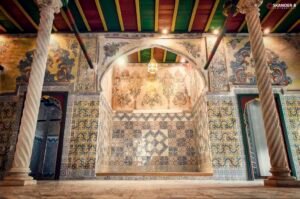

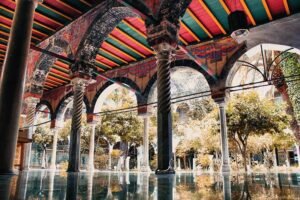
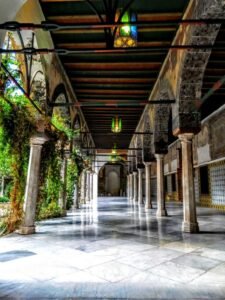
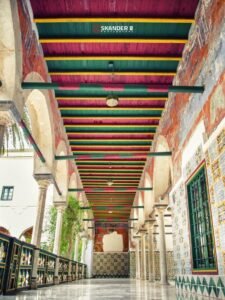
The palace with its refined architecture includes materials of various origins ranging from Livorno in Italy through Aurès, Kabylia and the ruins of ancient Cirta. It also includes precious materials taken from Constantinian houses such as marble and earthenware.
“Imagine a delicious opera decoration, all in white marble and paintings of the most vivid colors, of a charming taste, waters flowing from fountains shaded by orange trees, myrtles… finally a dream of the Thousand and One Nights. ”
The painter Horace Vernet, 1837
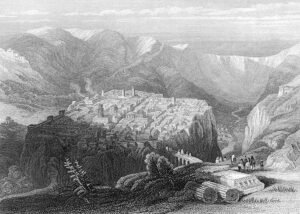
Hadj Ahmed Bey Ben Mohammed Chérif, better known as Ahmed Bey or Hadj Ahmed (known as the pilgrim), was the last bey of Constantine and the last Ottoman representative of the Algiers regency. His struggle against the French occupation in fact extended until June 1848 in the east of the country.
“We fought for two days with such ardor and relentlessness that I can say it was the bloodiest fight I have ever seen. God testify that since I was a child I have heard gunpowder speak many times. ” Ahmed Bey, 1844
Faced with the scale of the losses suffered and the weakened combatants, Ahmed Bey negotiated an end to the resistance in 1848. He died three years later and is buried on the site of the mausoleum of the marabout of Sidi Abd el-Rahman in Algiers. His tomb is recognizable by the marble turban overhanging it.
The palace was occupied from 1837 to 1962 by the French army and then from 1962 to 1969 by the Algerian army. It subsequently hosts many cultural events and since 2012 has been the site of the National Public Museum of Traditional Arts and Cultural Expressions.
Translated from : https://www.thecasbahpost.com/constantine-au-temps-dahmed-bey/
