



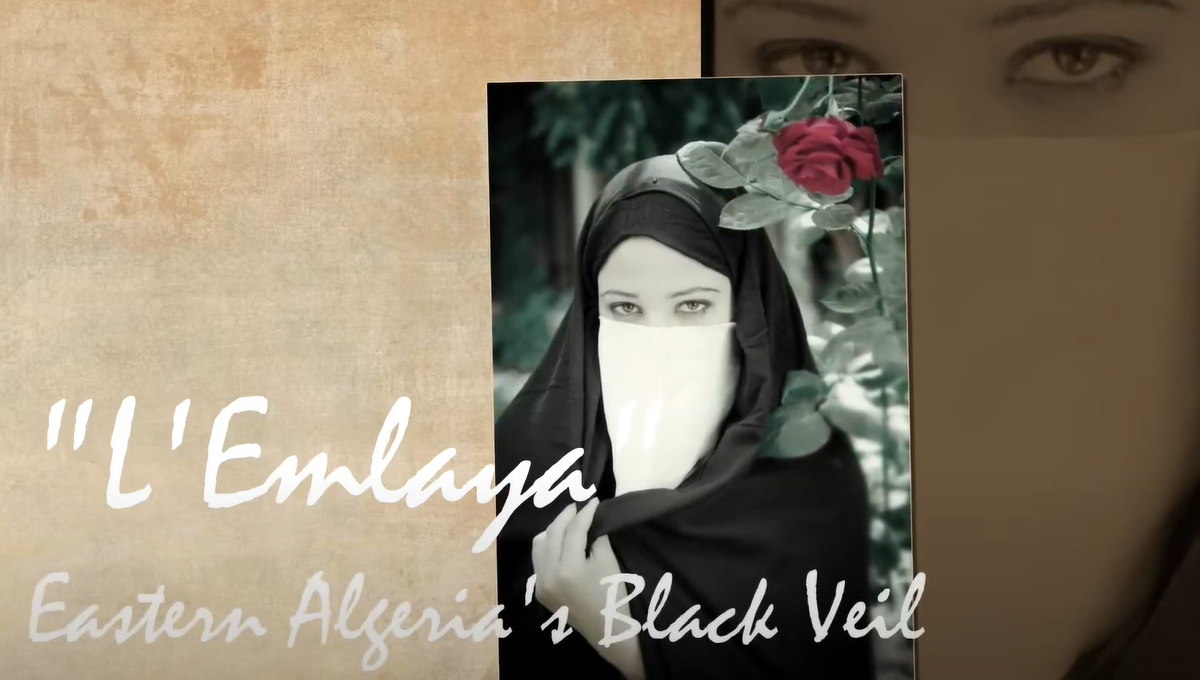
CONSTANTINE- The first edition of “The Constantine m’laya day” opened on Saturday evening at the National Public Museum of Arts and Traditional Cultural Expressions, Ahmed-Bey Palace in Constantine with an ode to beautiful fabric, declaimed by the poet, Radia Gouga.
From her collection “Dhikrayate Lala Z’haira” (Memories of Lala Z’haira), the poetess, also a visual artist, recited “Hikayate El M’laya”, a popular poem in the Constantine dialect through which she recounted the history of this dress, symbol of grace and authenticity, how to wear it and its accessories.
Handling the verb with art and manner, the poetess has “depicted” laâjar, this delicately embroidered white or ecru veil, or even “la chebrela”, a kind of ballerina formerly the ultimate accessory of elegant Constantine women at the m’laya.
In her story about the m’laya, Radia Gouga, crystallizing a most captivating poetic language, recalled the m’laya, quoted in the story of Nedjma and the poet Djaballah whose love story was immortalized through the famous “El Boughi”, the qacida which inspired several malouf singers.
The poem gave rise to a rich debate centered on the origins of the m’laya, and the difference between the m’layas of Constantine, Souk Ahras, Guelma and Annaba, animated by the present between academics and students.
Launched under the slogan “Constantine, the m’laya heritage and story”, the first edition of “The day of the m’laya constantinoise” was also marked by the organization of a session on the art of wearing this fabric , intangible heritage, embodying identity and seduction and which is now very rare in the streets of Constantine.
Also, an exhibition of paintings and photos presenting the m’laya from various angles, signed by several artists, adorns the galleries of the Ahmed Bey palace.
As part of the heritage month (April 18-May 18), the first edition of the m’laya which will last until next Tuesday continues with the opening of an exhibition of traditional clothes and jewelry. of “Dar Azzi”, one of the oldest and most famous houses of gandouras embroidered with gold thread, medjboud and fetla.
A parade of young girls in m’laya from the Ahmed Bey museum to the fountain of Sidi Djeliss, in the old town is also planned as well as the screening of a documentary, produced by the Ahmed-Bey museum retracing the history of m’laya.
The event will end with the awarding of prizes to the winners of the competition for the best sewn m’laya and the best photo, initiated by the National Public Museum of Arts and Traditional Cultural Expressions, Palais Ahmed-Bey to encourage artisans, designers and photographers. to take an interest in this fabric and to participate in the preservation of this intangible heritage.
Translated by Hope from APS.
