




Nama Taleb-Omar was midway through teaching her lesson when the soldiers came into her classroom.
It was October 2020, a month before the Polisario Front, which is fighting for an independent Western Sahara, declared an end to its 30-year ceasefire with Morocco.
But tensions between the Sahrawi liberation movement and the kingdom were already spiking. Along the berm, a 2,700km-long sand wall fortification that divides the areas controlled by Morocco and Polisario, spats and confrontations had been increasing.

In the village of Aghweinet, Sahrawi soldiers decided they could no longer guarantee the residents’ security. It was time to evacuate.
“The children were terrified. They were frightened about returning to their tents because they were close to the wall and wanted to go straight to the border with Mauritania where it was safe,” Taleb-Omar, 41, tells Middle East Eye from Dakhla refugee camp in southwestern Algeria.
Life in Polisario camps
About 30 families lived in Aghweinet at the time. Like other Sahrawi settlements in the 20 percent of Western Sahara controlled by the Polisario, Aghweinet is a remote collection of tents, mudbrick houses and more permanent concrete structures.
There are no roads into the town. In Polisario’s “liberated territories”, essential goods must be carted in on trucks from Algeria or Mauritania.
Around 175,000 Sahrawi refugees live in camps around Algeria’s Tindouf. The eldest were forced from Western Sahara when Morocco and Mauritania invaded in 1975. Most are their descendants, and know no other home.
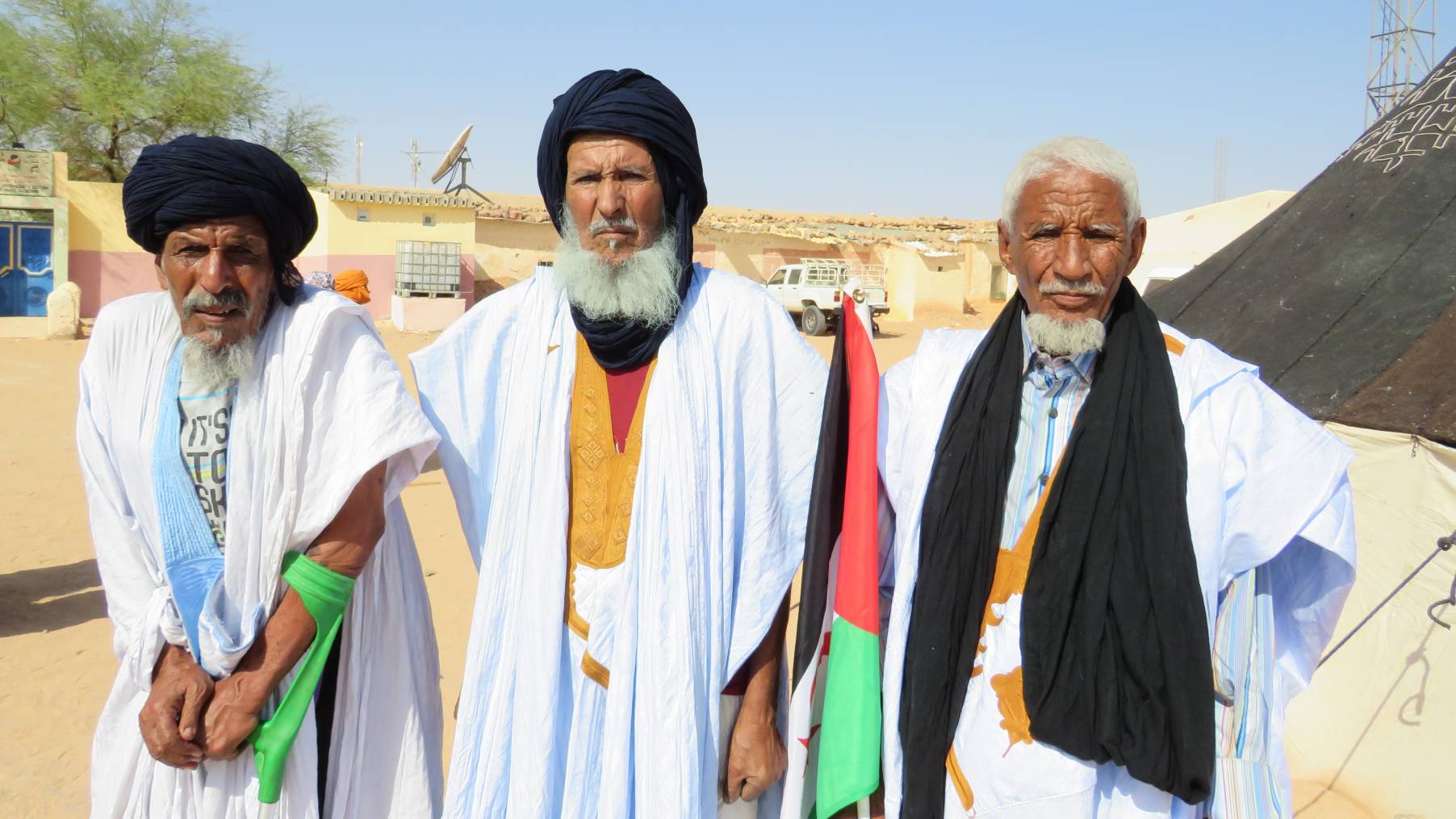
But during the past decade, a few thousand have trickled over into the Polisario-held parts of Western Sahara to make new lives, burnishing the Polisario-declared republic’s claim as an independent state and living a traditional Sahrawi nomadic lifestyle.
“It was a beautiful life,” recalls Taleb-Omar. “We became familiar with nature, tending our herds. I would never have left if it wasn’t for the war.”
But the evacuation put an end to that, making the families of Aghweinet refugees twice over. Residents were escorted to Algeria by the military in convoy. “The soldiers’ faces were blank, there was no fear,” says Taleb-Omar. “But everyone else was panicked – old and young. We were scared of Moroccan drones.”

Taleb-Omar’s parents found it impossible to give up the nomadic life. Like their daughter, they also fled Aghweinet in October and have settled just across the Mauritanian border, able to drift over to the liberated territories and tend their herds when needed.
But such a lifestyle isn’t for everyone. Khadjetu Salku, 25, moved to the northern Western Sahara town of Tifariti around six years ago because her parents wanted to live in more traditional ways.
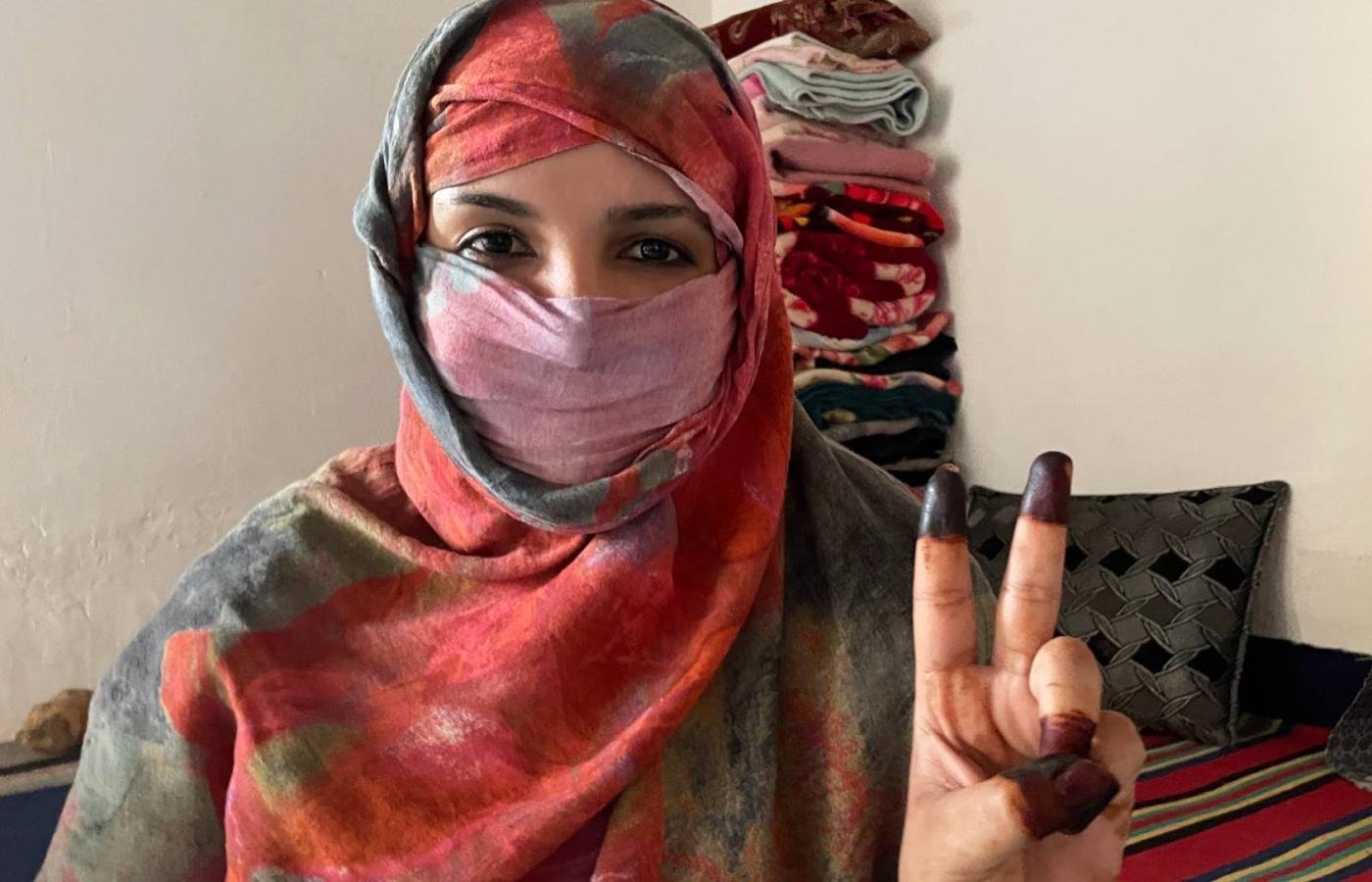
“I hated it! The first month was so boring, we left all my friends behind in the camps,” she tells MEE, her inky, henna-tipped fingers making arcs as she speaks. “But after a time I got used to it, felt more comfortable and began to like the atmosphere.”
Salku and her family left Tifariti four weeks after the ceasefire broke down in November 2020. “We were scared, but we didn’t have a car to get us out.” For Salku, it’s the evenings drinking tea with her friends in the Tifariti desert that she misses the most, although she’s okay in Bojador camp, where she’s staying with her aunt.
Her parents are a different matter. “My parents feel awful, especially my father. He always talks about Tifiriti and going back. As a goat herd, his work has been badly affected.”
Struggle of the Sahara herders
Like Salku’s father, Maalainin Mohammed, 59, was also a shepherd in the “liberated territories”, where he’d been living since 2013.
Though he left the village of Bir Tighisit in February, he was never rooted to one place. “I followed my herd and the rain. Wherever the rain has been, I will take my animals there.”
Even before the ceasefire broke down, Mohammed struggled. Western Sahara is suffering from a suffocating drought, and his goats were diseased and dying. “Sometimes we see a cloud, but it never rains. There is grass, but it has no nutrition.”
Then came the fighting, and the situation in Bir Tighisit grew worse. “We were not psychologically stable. When someone drove off to fetch water we assumed he would be killed and never return,” Mohammed says. “At night we couldn’t sleep because of the sounds of the bombing.”

Back in Dakhla camp, children are swarming over Taleb-Omar. Her husband, who was the director of a museum in Aghweinet, is serving with the army on the front.
“I’m not worried about him at all, Allah is with him. But it’s lonely here. The children’s friends are not here and I really miss my friend Alam. It was a beautiful friendship. We were like one family,” she says.
“I don’t know what the fighting will achieve. Violence is never the answer.”
Source : https://www.middleeasteye.net/news/morocco-western-sahara-polisario-refugees-algeria-driven-out
