



Source: theguardian.com
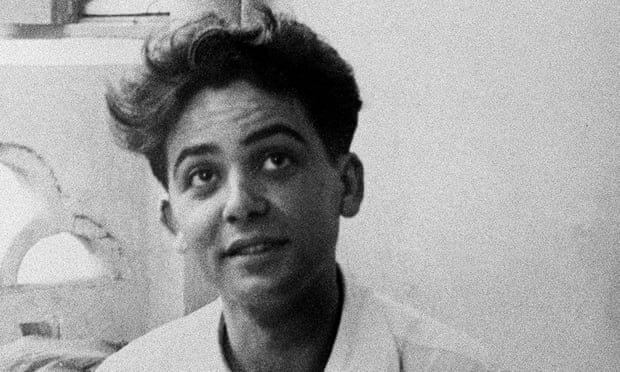
Michèle Audin was three years old and fast asleep with her two younger siblings when French paratroopers burst into her family’s flat on the third floor of an apartment block in Algiers and dragged her father away. She never saw him again.
Following his late-night arrest, on 11 July 1957, Maurice Audin, 25, a mathematician, was tortured and killed by French soldiers operating under special orders to do whatever it took to crush Algeria’s struggle for independence. His body was never found. His assassins were never identified, never officially investigated and never punished.
Last week, after a relentless 61-year campaign by Audin’s widow Josette, now 87, President Emmanuel Macron admitted the state was responsible for his death and acknowledged for the first time that France had used systematic torture during the Algerian war.
For Michèle, the declaration has been almost a lifetime coming. For France, it has taken more than 55 years to confront the unpalatable truth about a conflict that has long cast a shadow over the republic, its history and successive leaders.
“From the day my father disappeared, my mother thought of nothing else. We, the children, lived with it. My whole life, my identity, was linked to it; to who my father was and what happened to him,” Michèle told the Observer. “My mother never once stopped fighting, and it’s because of her we are talking of Maurice Audin today. My mother wrote to people, she wrote letter after letter in the days when there were no photocopiers. She wrote to everyone and she kept on writing.”

At the time of his arrest, Audin, a pro-independence activist member of the outlawed Algerian Communist party, was accused of harbouring members of the nationalist Front de Libération Nationale, whom French forces suspected of bombings. When he failed to return home, Josette was told he had been shot trying to escape. “Everyone knew what that meant; I knew what it meant too,” she said.
Like France’s role in the deportation of Jews under the Nazi occupation and collaborationist Vichy government – publicly acknowledged by the state only in 1995 – the Algerian war is an event that France would rather forget. Paris reluctantly relinquished its colonial grip on Algeria in 1962 after a seven-year conflict in which French soldiers brutally crushed any hint of rebellion, prompting pro-independence militia to respond in kind.
For decades, French officials talked of “les événements” – events – in Algeria, not “war”, which, like Northern Ireland’s “troubles”, cloaked savagery in euphemism. Historians pieced together tales of torture and assassinations. Film-makers made movies, among them Jean-Luc Godard, whose Le Petit Soldat (The Little Soldier) in 1960 was banned for three years because it denounced the use of torture by both sides. In 2005 Michael Haneke’s psychological thriller Hidden took a critical look at colonialism, including the 1961 massacre of 300 supporters of Algerian independence in Paris that was hushed up for 37 years.
Official investigations into what went on in France’s former colony were quashed as the state threw a blanket amnesty over atrocities by its forces, and each president found it politically expedient to avoid mentioning the war.
Josette Audin, who never remarried, wrote to each new French leader renewing her appeal for information. Shortly after he was elected in May 2017, Macron called her to say he was willing to do something. On Thursday, the Elysée Palace issued an official statement and the president visited Audin’s home with an apology.
“What Emmanuel Macron has done is a very big step and hugely important, because it concerns so many people in France, particularly those of Algerian origin,” Michèle said. “There was such distortion of the truth for such a long time. The gap between the historical reality and the official version given by the republic was enormous. At last this has been recognised. It’s a pity it’s taken so long for this historic moment to come, but it’s definitely the start of something, not the end.”
In Algeria, Macron’s mea culpa has been welcomed. In France, academics hope his statement and promise to open official archives will encourage witnesses from the period, protected by the amnesty, to come forward. A historian, Gilles Manceron, said Macron had made a “break with the attitude of denial, silence and lies we’ve long had from the state”.
France’s conservative right, historically less enthusiastic about Algerian independence, has accused Macron of scratching old scabs. Jean-Marie Le Pen, founder of the far-right Front National and a former paratrooper in Algeria – who has repeatedly denied accusations he was involved in torture – dismissed Audin’s assassination as “an event in a war, a civil war … where the rules aren’t the same as in the League of Nations”.
Michèle said she was “satisfied”, even if the truth of her father’s death remained elusive. “We knew my father was tortured and killed, we don’t know exactly how or who killed him, and it’s possible we never will, but to me that’s not the most important thing. For me, it’s important that the system, the state, recognises its responsibility.
“My mother feels differently. She was 26 years old. She had three children. My father was the love of her life. She wants to know who killed him and how. Most of all, she wants to know what they did with his body. She has fought this battle throughout her life until now, and she will continue it.”
A brutal conflict
The Algerian war of independence (1954-62) was a complicated colonial war marked by the brutality of both sides and their use of torture and terror against both military and civilian populations.
France was determined to keep control of its large and longest-held north African colony, invaded in 1830, which it considered an integral part of the republic and home to thousands of French expatriates. The Algerian Front de Libération Nationale (FLN) wanted full independence. The conflict also degenerated into a civil war between and within different communities.
In 1962, after negotiations with the FLN, President Charles de Gaulle signed the Evian accords granting Algeria independence, but the killing went on. Algerians who had worked for the French, known as Harkis, were regarded as traitors and many were killed by the FLN or lynch mobs.
Around 800,000 European-Algerians, known as Pieds-Noirs (black feet), fearing reprisals, fled to France, where the mass exodus was unexpected and often unwelcome. Many had never been to France and their families had lived in Algeria for generations, leaving a sense of alienation that endures among their children and grandchildren born in France.
Both countries still dispute the war’s death toll: France claiming 400,000 people, Algeria 1.5 million. Until last week, France refused to publicy admit it sanctioned the use of torture and summary executions against FLN militants and French sympathisers like Maurice Audin.
