



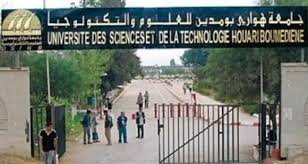
Source: www.wallpaper.com le 08 nevembre 2019
One afternoon in the British Library, Jason Oddy, photographer, artist and writer, stumbled across some Oscar Niemeyer buildings he was unfamiliar with. The sweeping curves, the volume and the story telling felt familiar, but the location – in Algeria – did not. After further research he discovered that the buildings, two universities and an Olympic-sized sports hall, were largely undocumented.
‘When Niemeyer left Brazil in 1966, after the 1964 military coup, he ended up in Paris, and then in 1968 he travelled to Algiers for the first time. He was there for six years. It’s a long time for an incredibly famous architect to be somewhere, but not that many people are aware of it,’ he tells Wallpaper*.
It was in June 1968, that Houari Boumédiène, chairman of Algeria’s Council of Revolution, socialist and hero of the recent War of Independence against France, invited Niemeyer, starchitect of Brasilia (and communist), to ‘project a new vision of Algeria to the outside world, and promote a new generation of engineers and academics.’
Niemeyer got started, designing the University of Constantine, with a sweeping concrete rendition of an open book supported by pilotis for the auditorium, completed in 1975. Then came the University of Science and Technology Houari Boumédiène and the Salle Omnisports known as ‘La Coupole’ for the 1975 Meditteranean Games in Algier’s Olympic Park. Each piece of architecture with their colossal open spaces and grand concrete gestures were designed to reflect Boumedienne’s socialist and militarist principles, and represent an ‘upending of the age-old order’.
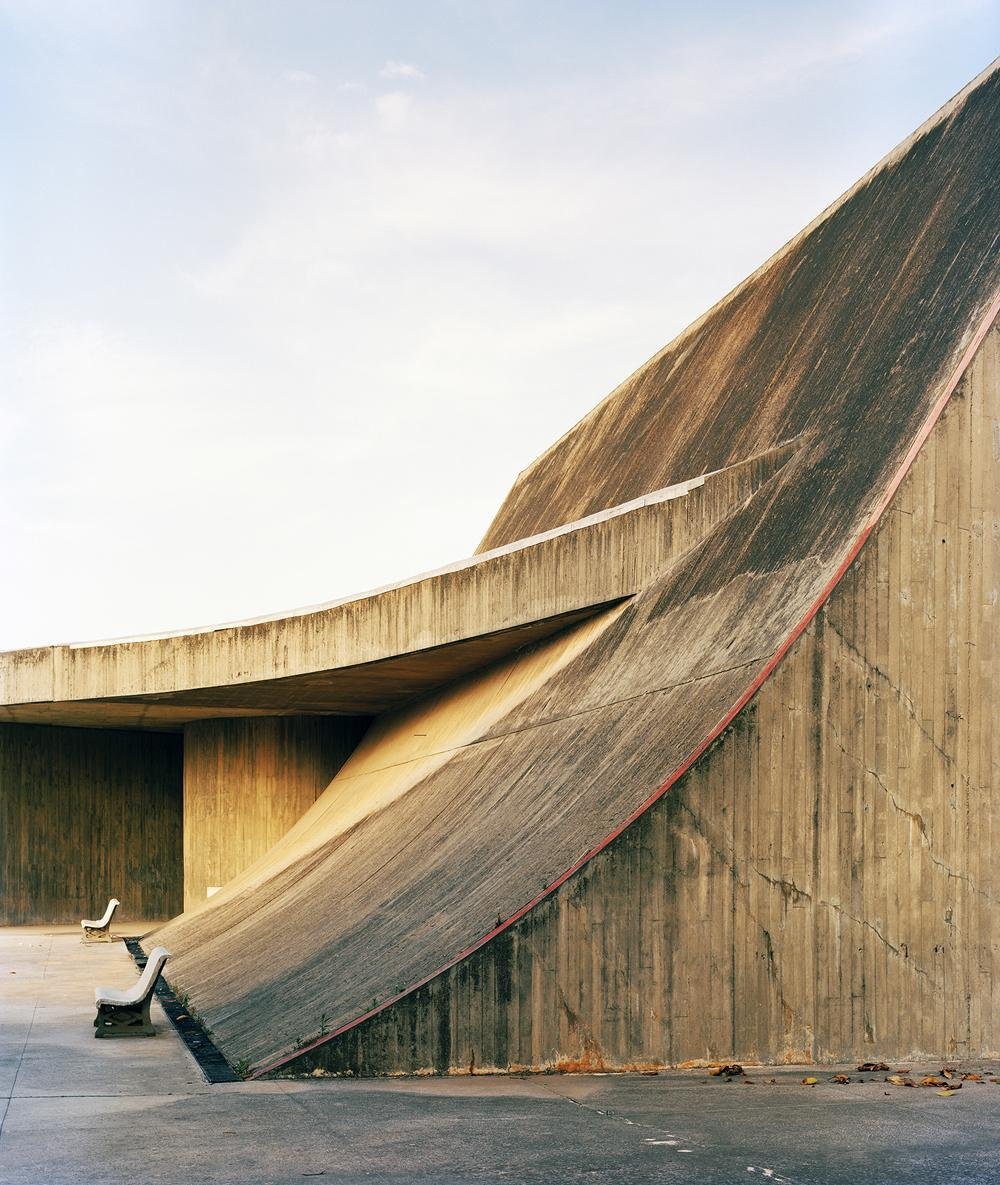
The Village’ VI, University of Science and Technology Houari Boumediene, Bab Ezzouar, Algeria, 2013, by Jason Oddy
‘He was commissioned to design a whole new downtown Algiers, in the manner of Brasilia, to create a huge municipal area with a new city for residential housing for Algerians, instead of the French. He also designed, in a moment of inspiration, a new mosque, that would float off shore into the Mediterranean.’
It was an exchange between architect and commissioner that summarized the politics of this place for Oddy: ‘Your mosque is beautiful, but it is quite revolutionary,’ said Boumédiène of the design. To which Niemeyer replied, ‘It is revolutionary, but the revolution cannot be stopped halfway.’
In his essay Oddy ponders on what ‘revolution’ meant to these two revolutionaries in this exchange, and whether they were talking about architecture or politics – it is possible that neither were on the same page of this open book. Nevertheless, when Boumédiène died in 1978, all of the projects got cancelled. Hence the title of Oddy’s book: The revolution will be stopped halfway.
After spending a week in Algiers in 2010, Oddy left the country with a better understanding of why the architecture had gone so undocumented. During his visit he came up against many bureaucratic barriers to photographing the government-owned buildings, and learnt more about the political history of the country, and its approach to tourism today. Unperturbed – Oddy has documented ‘the politics of place’ in some of the world’s most restricted spaces including the Pentagon, Guantanamo and a Nazi holiday resort – he spent three years pursuing permits to photograph the buildings.
On his return to Algiers, Oddy spent three weeks at the three venues, carefully documenting everything. His photographic technique, using a 5×4 inch plate camera, requires time and consideration that has become central to his style: ‘Unwieldy and slow-moving it obliges me to explore places in a measured, almost meditative way.’ And his results are therefore ‘traces of a deliberate engagement with space’.
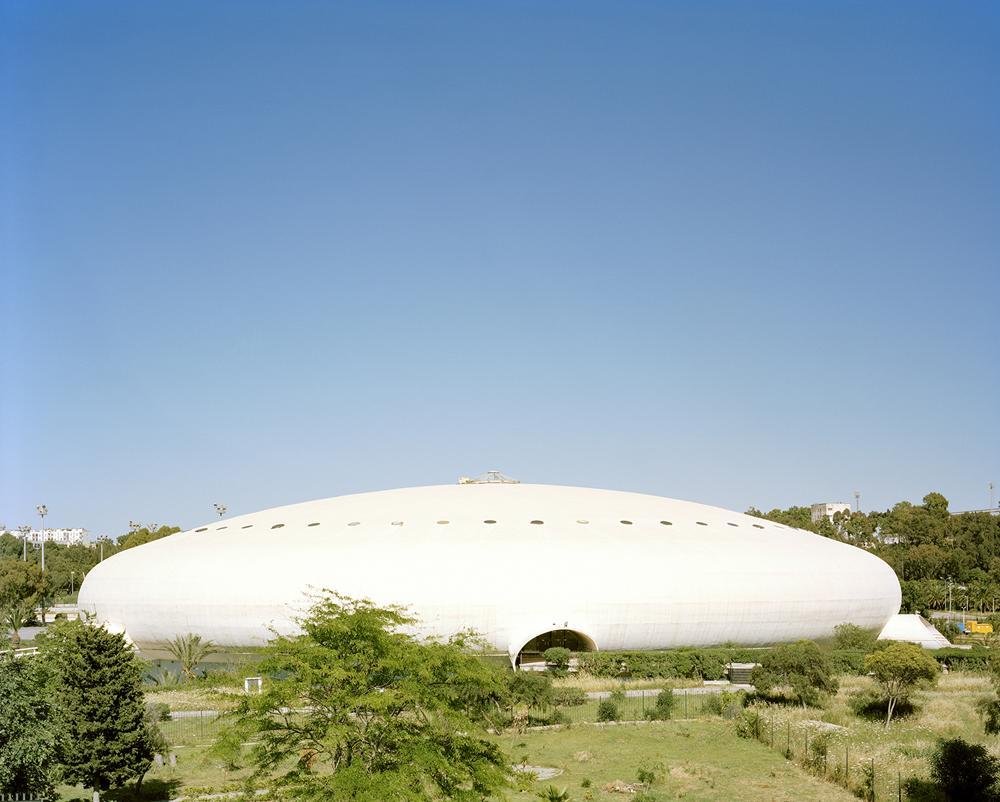
La Coupole I, Algiers, Algeria, 2013, by Jason Oddy
