



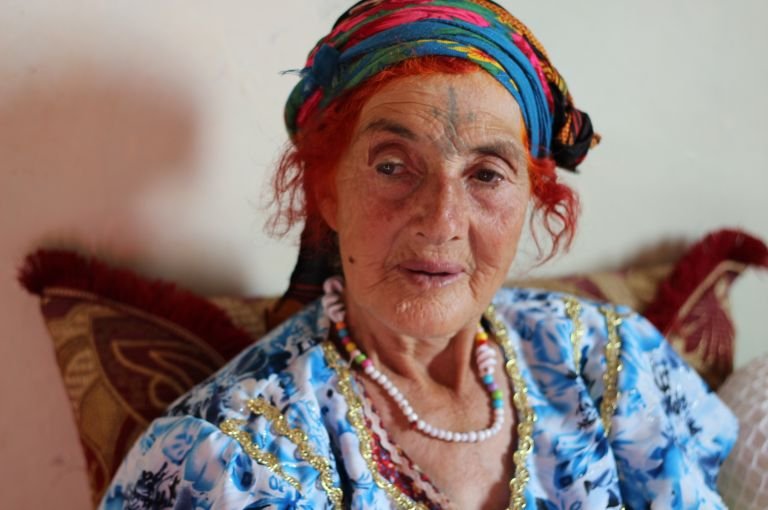
Traditional tattooing in Algeria is an endangered pre-Islamic practice that can be found in particular among women from the generations preceding the country’s independence.
The tattoo is an aesthetic and symbolic design made on the skin by depositing ink between the dermis and the epidermis. We meet this tradition from North Africa to Oceania via the Middle East. The term comes from the Tahitian tatau meaning to draw or mark the skin. In Algeria, its traditional practice is called lewcham or el-ayacha meaning the one who gives life, because of the therapeutic or protective function which is conferred on it.
Traditional tattooing in Algeria is an endangered pre-Islamic practice that can be found in particular among women from the generations preceding the country’s independence.
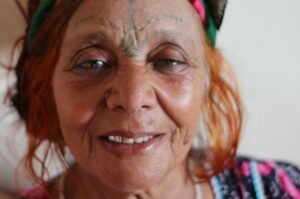
Although many works document the practice in its Japanese, New Zealand (Maori) and even Moroccan and Tunisian forms, traditional tattooing in Algeria has only been the subject of a limited amount of research. This absence has led to the development of many myths about its origin. Some limit tattoos to the simple expression of tribal affiliation, still others link the origin of the practice to the desire of women to become ugly in order to protect themselves from French soldiers during colonization.
According to anthropologist Yasmin Bendaas, this latter myth is not without merit since during colonization some women did adopt tattoos for political purposes. These were said to have been imbued with local symbols of resistance and protection, such as the burnous and the rikab used by the cavalry.
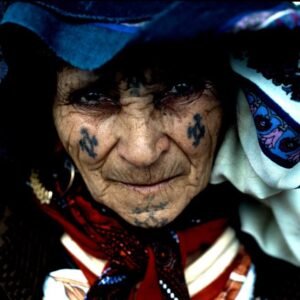
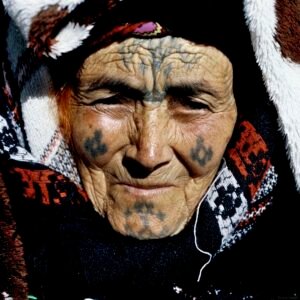
portrait de femme Chaoui
The researcher, who was interested in the traditional tattoos of Chaoui women in the Aurès region, points out that the lack of knowledge about the meaning of traditional tattoos indicates that the tradition was already endangered long before current generations. did not get tattoos during the 1930s and 1940s. In addition, the symbols were often chosen by the tattoo artist rather than the tattooed person, making it all the more difficult to find their meaning and origin. to be determined.
Indeed, many women in the region have been tattooed by those known as “adasiyat”, women belonging to nomadic populations originating from the Algerian Sahara, Orania or Tunisia. For Yasmin Bendaas, the adasiyat exchanged their tattooing services for various commodities or products. The practice of traditional tattooing is said to have disappeared with the end of this form of commerce, in conjunction with literacy training and the spread of religious practices prohibiting body modifications.
In the description of the nomads, the interviewees note that the adasiya spoke Arabic, which would explain why the names of the tattoos are in Arabic and not in Chaoui. Masouda’s husband remembers that the adasiya was a woman who traveled by horse with her hair braided on either side. She knocked door to door and often accepted flour, eggs and shoes instead of money for her services.
Source : translated from https://www.thecasbahpost.com/le-tatouage-traditionnel-en-algerie-mythes-et-realite/
